 International Paper is acquiring North Pacific Paper in Longview, Washington. In related news: West Fraser resumes operations at Blue Ridge Alberta mill; workers at Weyerhaeuser, Kenora join the United Steelworkers; Hodder Tugboat buys Seaspan’s forestry transportation assets; and Port Hawkesbury Paper isn’t shielded from Nova Scotia Power’s debt. Meanwhile: NRCan receives Forestry Transformation Task Force report; and mass timber story-features from BC, Nova Scotia, the US, and Australia.
In Forestry/Wildfire news: BC’s forestry crisis goes deeper than Trump’s tariffs; BC ministers provide flood, drought and wildfire warning despite wet spring; ENGOs says BC old-growth is still at risk; North Cowichan Council debates log exports; the US Forest Service reorg doesn’t need Congress’ approval; Connecticut studies prescribed burning’s impact on soil; Wisconsin’s Governor highlights upcoming Forest Appreciation Week; and International Pulp Week highlights Vancouver conference keynote speakers.
Finally, Forestry Australia’s playful forestry promotion video – is worth a look.
Kelly McCloskey, Tree Frog Editor
 Premier David Eby delivered the closing luncheon keynote at the 2026 COFI Convention on Friday, addressing a packed room of delegates and committing to a range of actions on fibre access, market diversification, value-added manufacturing, and reconciliation. The session, moderated by COFI President and CEO Kim Haakstad, included a substantive question-and-answer period. Eby opened by acknowledging both the challenges facing the sector and the role provincial policy has played in them — including restrictions around old growth and other policies that he said the government needs to do a better job of consolidating to ensure the fibre supply industry requires can actually be delivered. He described the conference theme of “Forestry is a Solution” as accurate across multiple dimensions — economic, environmental, and community — and said the province is committed to ensuring a sustainable forest sector for the long term. On tariffs, Eby said the US cannot produce enough wood to meet its own domestic demand and has been increasing imports from Europe and Russia to fill that gap — at higher cost to American consumers and at the expense of housing affordability.
 The 2026 BC Council of Forest Industries Convention opened Thursday morning at the JW Marriott Parq Vancouver with a welcome session that set a clear tone for the two days ahead — forestry as both an industry under pressure and a source of solutions to some of British Columbia’s most pressing challenges. The session was anchored by Greg Stewart, President of Sinclar Group Forest Products and Chair of the COFI Board of Directors, who noted the convention was sold out. Speakers also included a territorial welcome from Squamish Nation Forestry Specialist Brian George, a civic address from City of Vancouver Councillor Lisa Dominato, and opening remarks from Kim Haakstad, President and CEO of COFI.
 The Tree Frog News has been featuring the panels and speakers from the Council of Forest Industries 2026 Conference over the last week. For those who missed the coverage, here are all of our summarized stories.





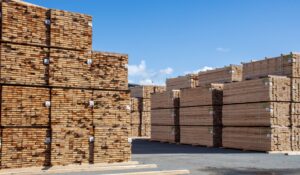 Canadian softwood producers have now paid more than US$8-billion in US duties since 2017, as BC’s Forests Minister seeks to keep lumber on Ottawa’s radar to resolve the trade dispute. The issue of Canadian softwood shipments into the US is not directly addressed by the United States-Mexico-Canada Agreement. …About US$2-billion in interest has gradually piled up over the past nine years, bringing the value of duties paid plus interest to more than US$10-billion. …Last week, the US said it plans to decrease duties for Canadian softwood. …The revised anti-dumping and countervailing duties equal 24.83%, and when combined with the tariffs, the levies would total 34.83%. …Canfor would see its total levies decline to 31.02%, down from the current 47.59%. West Fraser’s duties would decrease to 20.70%, compared with the current 26.47%. The duty rate for Resolute FP, a subsidiary of Domtar, would drop to 24.95% from the current 35.16%. [to access the full story a Globe & Mail subscription is required]
 TORONTO – Worried about wildfires sending claims soaring this year, Canada’s property and casualty insurers are pushing owners to flood- and fire-proof homes and urging the government to take climate issues more seriously despite economic turmoil. Insurers Intact Financial, TD Insurance, Wawanesa and Definity Financial face financial pressure as claims surge and in turn push up home-insurance premiums, which rose about 6% last year in Canada. They worry Prime Minister Mark Carney’s prioritization of energy and the economy over risks from climate change could contribute to more wildfire- and flood-related damage over time. Canada has seen record wildfire and flood damage in recent years. But calamity-prone regions are still insurable in Canada, unlike in some other countries where companies will not insure houses for wildfires. This year is expected to be among the hottest years on record.
 OTTAWA — The Canada Border Services Agency has launched a probe to determine if plywood is being subsidized or sold at unfair prices in Canada. A news release from the agency says the investigation began on April 10 and focuses on imports from producers operating in or exporting from China. It says the practices can harm Canadian industries by undercutting Canadian prices and undermining fair competition. The investigation comes after a complaint was filed by Columbia Forest Products and the Canadian Hardwood Plywood and Veneer Association, which say they’ve faced lost sales, poor financial results and reduced employment. The CBSA and the Canadian International Trade Tribunal are both involved in investigations of Chinese plywood. The tribunal will issue its decision by June 9, while the CBSA’s probe into unfair prices will reach a preliminary decision by July 9.

 VANCOUVER — Ottawa must make a case of “mutual benefit” with the United States as it advocates for Canada’s softwood lumber industry during trade negotiations, BC Premier David Eby said Friday… “the US cannot produce enough wood to meet its domestic demand.” …The premier’s remarks came after the U.S. Department of Commerce posted its preliminary tariff determination for the sector, with total duties estimated at just short of 25%, lower than the current rate of more than 35%. …COFI’s Kim Haakstad, agreed with the premier, saying it’s important for B.C. to ensure softwood lumber doesn’t “get lost” among other industries based in Eastern Canada. …The Independent Wood Processors Association said the US ruling was “further evidence” the softwood lumber dispute mechanism has become a “broken process”. The BC Lumber Trade Council said Canadian lumber producers continue to face “unjustified and punitive trade measures.” BC Forests Minister Ravi Parmar said the province was disappointed.
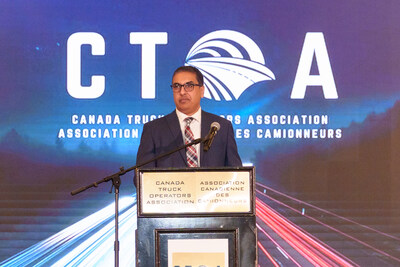
 TORONTO — Kevin Holland, Associate Minister of Forestry and Forest Products; Mike Harris, Minister of Natural Resources; and Vic Fedeli, Minister of Economic Development, Job Creation and Trade, issued a statement in response to a preliminary indication from the US which suggests that softwood lumber duties may decrease from the current rate of approximately 35% later this year: “Ontario’s forest sector has a global reputation as a leader in the G7 in the production of high-quality wood and wood products. …While this preliminary indication suggests some relief for softwood lumber producers later this year, Ontario remains firm that duties are unwarranted and not supported by the evidence. We continue to call for the full removal of all duties that raise costs for both American and Canadian families. These ongoing duties and tariffs reduce productivity, disrupt supply chains, drive up the cost of construction and make housing less affordable.”
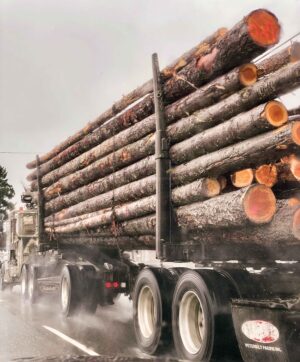 When it comes to the future of the forest industry in Newfoundland and Labrador, the struggling newsprint mill in Corner Brook usually steals all the headlines. But some key players in the lumber manufacturing business say they’re framing up a solid future. And they have very different opinions when it comes to Kruger-owned Corner Brook Pulp and Paper, and that company’s $700-million strategy to modernize its paper making operations, and become a long-term electricity provider to the provincial power grid. “We’re confident in [Kruger’s] plans … for the future, and we’re confident in the direction the forest industry is going to take in Newfoundland,” says Kyle Osmond, operations manager at the family-owned Burton’s Cove Lumber and Logging mill in Hampden, White Bay. …So as the forest industry navigates yet another crucial period in its long history, the often-overshadowed sawmill sector is keen to emerge from the shadows, but their business approach is markedly different.
 BRUSSELS — The European Union’s trade surplus with the rest of the world shrank by 60 per cent in February as exports to the United States dropped by more than a quarter, with U.S. import tariffs of 15 per cent largely in place on EU goods. EU exports as a whole were 9.3 per cent lower in February than a year earlier, while imports were down 3.5 per cent, EU statistics office Eurostat said on Friday. The largest export decline was towards the U.S., with a drop of 26.4 per cent, while imports from the United States were 3.2 per cent lower. EU exports to China were also down. A year ago, EU exporters had begun front-loading shipments to the U.S. in anticipation of U.S. President Donald Trump’s tariffs, inflating the export figures for early 2025 and potentially explaining February’s sharp decline. Exports to the United States in February 2025 rose by 22.4 per cent year-on-year.
 Rising tensions between the United States and Iran are creating mounting challenges for recycled paper mills across the Gulf region, known as the GCC. The sector is heavily dependent on imported recovered paper, particularly OCC (old corrugated containers) and mixed waste paper from Europe, the United States and Asia. Geopolitical instability has led to higher freight costs, increased insurance premiums and growing uncertainty in supply chains. Although local waste paper collection remains relatively stable, the unpredictability of imports has made procurement strategies more complex. Delays and disruptions in shipments risk directly affecting production. At the same time, the cost of key inputs is rising. Prices for chemicals, starch and spare parts are increasing due to logistical bottlenecks and delayed deliveries. …Despite these pressures, the market outlook in the Middle East remains relatively stable in the short term. …However, prolonged geopolitical uncertainty could gradually dampen industrial activity and consumption.
 DOHA, Qatar — Until the Iran war, shipments of Austrian spruce timber to Qatar, where the wood is used to support concrete and make basic frames on construction sites, were a matter of routine. The standard 2×4 was typically sourced from Austria, shipped to Dubai’s Jebel Ali port, transferred to a feeder vessel and delivered to Qatar’s Hamad Port in about 45 days. It must now be offloaded, trucked overland and reloaded onto new ships, adding thousands of dollars in costs and months to delivery times. …The detour added a surcharge of about $3,600 per container – some shippers quoted the supplier surcharges as high as $5,000 per container – more than triple the normal cost of shipping…and delivery is expected to take another one to two months. …Several containers of plywood spent weeks at sea before being returned to port, underscoring how importers lose control over shipments once they are on the water.
 Canada’s annual inflation rate rose to 2.4% in March, Statistics Canada said on Monday, as the cost of oil sent fuel prices way up. High prices for energy, especially gas, due to the war in Iran drove inflation higher. Energy prices were 3.9% higher compared to a year ago, and the data agency said March’s 21.2% monthly increase in the price of gasoline was the largest on record. The impact on inflation would have been higher, Statistics Canada noted, if it weren’t being compared to prices from March 2025 that still included the consumer carbon tax, which was dropped in April of last year. Higher fuel costs also impacted the cost of transportation — up 3.7% year over year in March — and helped drive overall inflation higher. …Without the price of gas, the pace of inflation would have risen to 2.2%. Douglas Porter, at the Bank of Montreal, says core inflation was actually milder than expected.
 VANCOUVER, BC – West Fraser Timber provided notice of Q1, 2026 conference call and softwood lumber duties and operational update. …The Company expects to record a $73 million non-cash charge in Q1-26 to export duty expense, representing the difference between previously recorded expense for 2024 based on CVD cash deposit rates of 2.19% and 6.85% during the year and the preliminary CVD rate released of 15.93%. …Additionally, the USDOC is processing the liquidation of ADD for the first administrative review period (AR1) covering exports between August 2017 and December 2017. Based on the liquidation rate, the Company expects to receive a refund of $15 million in 2026. Operational Update: Full operations have resumed at the Company’s Blue Ridge Alberta lumber mill following a fire in January of 2026, and production has commenced at the new lumber facility in Henderson, Texas. Manufacturing operations at the Company’s High Level, Alberta OSB mill will be concluded by the end of April.


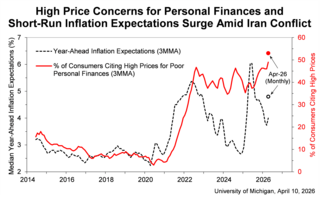
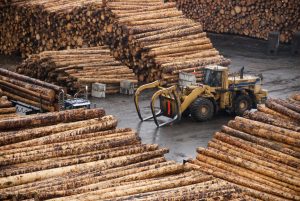 Log cost inflation, tightening felling regulations, muted end-product demand and the disruption of Middle East & North Africa (MENA) export channels by the conflict in the Persian Gulf are combining to test the resilience of sawmills in Finland and Sweden, with the pressure being felt all the way to Central European timber yards. In September 2025, Finland and Sweden jointly wrote to European Commission President Ursula von der Leyen, warning that both countries were on track to miss their binding EU forest carbon-sink targets. …Finnish Prime Minister Petteri Orpo said, that reducing felling volumes was “not a viable option” and that it would have “dire consequences” for Nordic economies.” This high-level lobbying by Norway and Sweden highlights the central tension now confronting the Nordic sawn timber industry: that a sector already struggling with elevated sawlog costs and sluggish end-user demand has found itself additionally squeezed from above by environmental regulation.

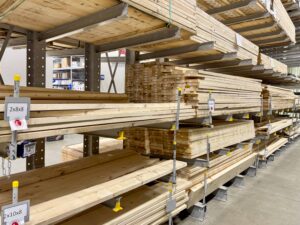 The UK construction sector is being encouraged to increase its use of homegrown timber, as industry experts highlight the benefits of locally sourced materials over imports. Despite the availability of sustainable domestic options, nearly 80% of timber used in the United Kingdom continues to be imported. This reliance is now being questioned across the supply chain. …A key issue raised within the sector relates to timber grading. Architects and engineers frequently specify higher grades such as GL28 or C24 without fully assessing project requirements. This trend has developed due to historical dependence on imported Scandinavian timber, where C24 is the standard grade. In contrast, the most common grade produced in the UK is closer to C16. This mismatch has led to inefficiencies. British timber is often overlooked. Specifications are sometimes made without full evaluation. The ‘Trust UK C16’ campaign is aiming to address this imbalance.
 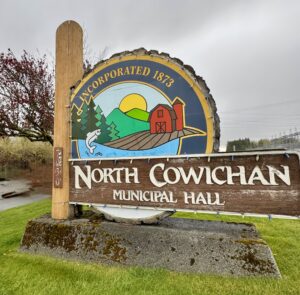 A North Cowichan Council meeting on April 15 drew industry representatives, union members, and members of the public into an unusually substantive debate on coastal fibre supply and log exports — one that will be remembered as much for the nature of the conversation as for its outcome. Across all the voices heard that evening, a single fundamental goal emerged: a stronger, more productive coastal forest sector that supports workers, families, and communities in the Cowichan Valley. This was not the familiar divide between those who see the forest as a working resource and those who would leave it untouched. It was a debate entirely within the pro-forestry community — about economics, policy, and the best path to keeping mills running and people employed. The motion itself, brought forward by Councillor Justice, called on the governments of BC and Canada to review and strengthen policies governing raw log exports from forest lands on Vancouver Island.
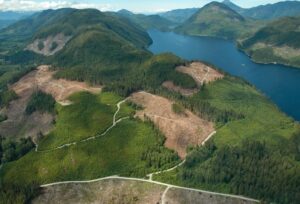 Recently, the phrase “active forest management” has come into usage by the forest industry in numerous countries. In Australia, the equivalent terms are “forest gardening” and “cultural thinning.” …The concept is convenient for the forest industry because it allows companies to continue doing what they have done since the onset of industrial logging. Better yet, the industry is promoting the idea that logging is a solution to the wildfire problem we now face. Actually, the massive cutting down of forests in B.C. and elsewhere has created the problem that the industry wants to solve by more cutting down of what is left of our primary or unlogged forests. Clear cutting forests creates several problems. First, it dries out the land. Without the shade that trees create to cool the land, and without tree roots holding back the water from snow melt and precipitation, the land becomes highly susceptible to fire.
 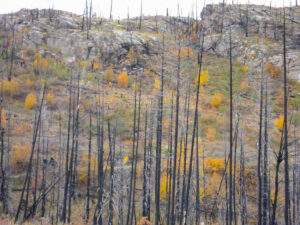 It didn’t take long for the smoke to clear following 2017’s horrendous wildfires for the BC government to respond with a plan to log more forests and plant more trees. The scale of what had just happened exceeded anything on record. Fires burned more than 12,000 square kilometres of the province’s forests and grasslands. No wildfire season over the previous half century had come remotely close. Yet, it would take just one more year for a new record to be set. In its 2017 post-fire response plan, BC’s Ministry of Forests promised to replant the forests that had burned. …But a look at what actually burned in the worst fires of 2017 suggests that aggressive logging and “reforestation” — essentially just tree-planting — sets the stage for even more frequent wildfires to come. …Science shows that young stands of trees, with their branches lower to the ground, are more vulnerable to burning in catastrophic fires.
  Mosaic Forest Management wants a more informed discussion on wood-fibre security and log exports with North Cowichan’s council before the municipality decides if it wants to move forward with a motion on the issue. Coun. Christopher Justice had made a notice-of-motion that, if adopted, would encourage senior levels of government to review and strengthen their policies, including those governing raw log exports from private managed forest lands on Vancouver Island. … Karen Brandt, at Mosaic, said the motion does not accurately reflect how the coastal-fibre system operates, and risks unintended consequences for the local mills, workers and communities that council is seeking to support. Brandt said… “The motion suggests international log sales from private-managed forest lands reduce fibre available for domestic manufacturing when, in fact, the opposite is true.” …Brandt said that if the objective is to improve fibre availability, the primary issue is the decline in Crown harvest levels.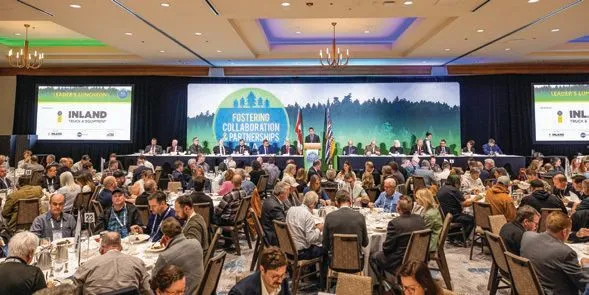
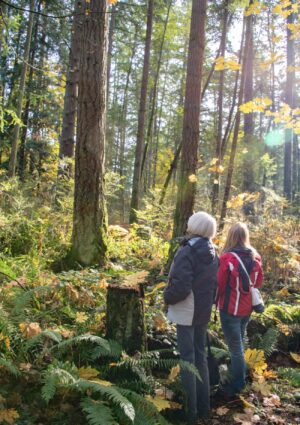 Alberta’s environment minister has expanded the province’s definition of “protected lands” in a bid to reject Ottawa’s nature strategy. This comes after Canada, along with 195 other countries, announced plans to protect 30 per cent of its land by 2030, an objective known as 30×30. But Grant Hunter, Alberta’s minister of environment and protected areas, said that the province already protects 60 per cent of its land based on its own definition. “Federal reporting measures do not capture the full picture, focusing on narrow definitions of protected land,” he said. “Alberta takes a different approach. Our province includes all publicly owned and regulated lands, including those protected from development.” …Alberta rejects Ottawa’s one-size-fits-all approach to conservation and expects recognition and provincial jurisdiction of all national conservation targets, Hunter said. Alberta’s claim to have already achieved the 30×30 commitment is “concerning” and “disingenuous,” said Kecia Kerr, of Canadian Parks and Wilderness Society (CPAWS) Northern Alberta.


 Bayer CEO Bill Anderson says the German crop science and drug company is hoping to move past the long-running controversy over its Roundup weedkiller in 2026. Bayer — which acquired Roundup when it bought Monsanto in 2018 — recently announced a $7.25 billion settlement deal and is awaiting a Supreme Court ruling that could decide the product’s fate in the U.S. Anderson said that the settlement and the legal fight — which experts believe the company will win — are “major milestones” in Bayer’s turnaround. …Anderson said “This is a very important product for agriculture. It’s been demonstrated to be safe over and over again and cleared by regulators in every nation, and we’re ready to put this chapter behind us.” The Supreme Court is poised to rule on whether states have the authority to govern Roundup, or whether federal environmental regulators should control its fate.
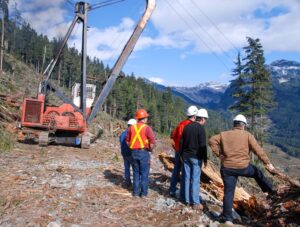 MONTANA — After the US Forest Service unveiled a proposal last month to give Montana’s lumber industry a “predictable” timber supply from three national forests, questions about the agency’s plan to incorporate an 82-year-old law into a modern forest-management framework abounded. Broadly speaking, the Tri-Forest Federal Sustained Yield Unit would direct the Helena-Lewis and Clark, Beaverhead-Deerlodge and Custer Gallatin national forests to supply local businesses with at least 35 million board feet of timber per year. The Forest Service is pitching the proposal as a tool to sustain local economies and encourage investment in the lumber industry for the 22-county region included in the unit. It’s necessary, the agency says, because the closure of the Pyramid Mountain Lumber sawmill and the Roseburg Wood Products facility have demonstrated the industry’s vulnerability. But at a recent hearing the Forest Service hosted in Helena, the proposal drew a mixed reception.
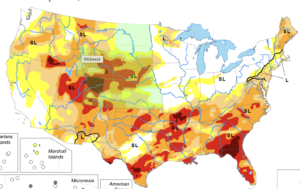 ARIZONA — Rim Country and the White Mountains are not alone in bracing for the 2026 fire season, which is approaching. A national April-to-July forecast shows nearly the entire Western United States faces an above-normal risk of wildfires over the next four months. Fire officials said two weeks of cloudy weather with scattered rain showers have given Northern Arizona some breathing room, but the lack of snowpack and above-normal temperatures will still result in an early start to the fire season. The National Interagency Coordination Center predicted above-normal fire threat in every Western state at some point between now and summer. Much of the Southwest faced high-risk conditions during an unusually warm March, and those hazardous conditions are expected to expand into other Western states this month. Forecasters point to record-low snowpack across much of the West.
  CONNECTICUT –Plant science researchers and the UConn Fire Department are using prescribed burns to mitigate brush fires and study the role of microbes in soil recovery to generate new insights to help Connecticut manage rising wildfire risk. …In the fall of 2024, Connecticut saw a record 605 wildfires, which burned more than 500 acres and prompted a statewide emergency declaration, a temporary burn ban, and multi‑agency firefighting support. …
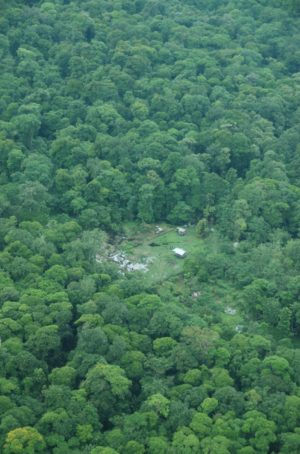 Most European consumers care about forests – they don’t want to eat, wear and wash with products that contribute to forest loss. This is the root of the European Union’s Deforestation Regulation (EUDR), which takes aim at the links between EU imports and global deforestation, estimated to affect an area almost the size of Rome each year. Yet the EUDR has faced pushback, resulting in dilution and delays, with implementation postponed to the end of 2026. This is a critical moment for the law. The Commission has been tasked with a simplification review, which it must report on by the end of April. …EU lawmakers would do well to consider new evidence from Forest 500, showing that companies have already responded tangibly to the prospect of legislation. The EUDR has succeeded in steering business expectations, galvanising investments and driving supply chain action by some of the most influential companies in the deforestation economy.
 The Drax power plant in North Yorkshire received record subsidies of almost £1bn for burning trees to generate electricity in 2025, a climate thinktank has calculated. The company was paid £999m last year for generating about 4.5% of Great Britain’s electricity from its biomass plant, costing each household £13 a year, according to analysts at Ember. The power plant was able to claim £2.7m a day from energy bills in part by increasing its power generation by about 2% from the year before – but mostly due to the rising payouts from a legacy renewables support scheme. …The Guardian revealed last November that forestry experts believed the company was burning 250-year-old trees sourced from some of Canada’s oldest forests as recently as last summer. …The government has already halved the subsidies available to Drax. …Drax will have to switch to using woody biomass from 100% sustainable sources, up from the current level of 70%.
  UK — Burning wood for power generation can be worse for the climate than burning gas, even when the resulting carbon dioxide emissions are captured and stored,
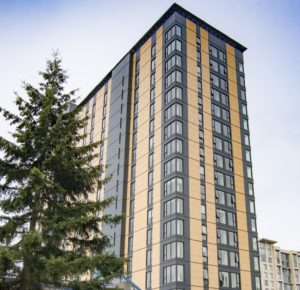 EUROPE — The war in the Middle East has – among many other unintended but avoidable consequences – put renewed pressure on the European Union to water down its carbon pricing policy. The focus right now is on the existing Emissions Trading System (ETS), but it’s not too soon to be concerned about the fate of its upcoming sequel, known as ETS2. ETS2 is the most consequential climate policy most Europeans (much less the rest of the world) have never heard of. Whereas the existing ETS puts a price on the carbon pollution caused by major industries such as power generation, steel, shipping, aviation and cement, ETS2 does the same for fossil fuels used for land transport and to heat buildings. As such it will impact as much as 40% of the EU’s total emissions – and the living costs of 450 million Europeans. The clock is ticking. ETS2 is scheduled to come into effect in 2028.
 Domtar says WorkSafeBC is investigating after a worker was injured at its Port Alberni mill last week and taken to hospital in serious condition. CHEK News reported that the man had a burn injury. “A full investigation is underway with WorkSafeBC, and we intend to share more information as it becomes available,” Domtar said in a message to employees. It also recognized coworkers who responded quickly to help the man “and ensured that he received immediate care.” B.C. Emergency Health Services said it was called at 5:44 a.m. April 9 for the incident. [END]
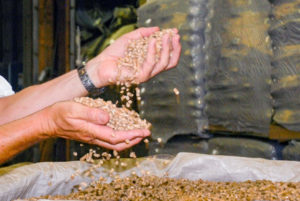 FRANCE — Wood pellets, commonly used in stoves and boilers in homes across France, can release carbon monoxide (CO) during storage even without being burned, reports the French Agency for Food, Environmental and Occupational Health & Safety (ANSES). Natural chemical reactions inside the pellets, particularly the oxidation of fatty acids in the wood, can cause them to heat up slightly and release gases without any combustion. In addition to carbon monoxide, stored pellets can emit other gases such as carbon dioxide (CO₂), methane (CH₄), and volatile organic compounds (VOCs). These processes can also reduce the amount of oxygen in the surrounding air. ANSES says these emissions are usually low and gradual – but tend to increase at higher temperatures. They decrease over time. The type of wood is a factor with, for example, pine pellets likely to emit more gases than spruce. Although the overall risk is limited.