 Trump’s trade war is already impacting US farmers, homebuilders and consumers. In related news: the risk of a global recession surges; while lumber futures stabilize. In other Business news: BC-based Kingsley Trucking is seized as part of San Group bankruptcy; a fire destroys Alberta’s Zavisha Sawmills; removing trade barriers is seen as a risk to New Brunswick wood manufacturers; and mass timber showcases courtesy of Ontario and Kansas.
In Forestry/Wildfire news: BC mayors encourage province to up its harvest; Weyerhaeuser’s logging said to threaten Alberta caribou; Manitoba invests in water bombers; ENGOs say US logging policy threatens 10 species; US Northwest swamps are carbon rich; and the search for a Oregon’s new state forester is underway.
Finally, BC Truck Loggers announce long-awaited tool for BC timber harvest rates.
Kelly McCloskey, Tree Frog News Editor
 The BC Truck Loggers Association is pleased to share and invite you to access the newly developed B.C. Timber Harvest Rate Model. The tool was built using data provided by contractors as a joint project of the TLA, ILA and NWLA. The tool calculates the hourly rates for equipment used in BC’s forest industry. It’s designed to give contractors a baseline rate for a selected piece of equipment, serving as a starting point. The rates in the model reflect the required revenues of a contractor who runs a reasonably efficient operation; however, they may vary based on specific operations. The parameters (such as labour and fuel) can be adjusted in the model to calculate rates tailored to specific needs.
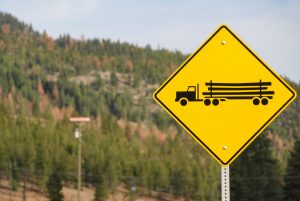 WASHINGTON – The US Commerce Department said on Wednesday it is opening a probe into national security impacts of imports of medium-duty and heavy-duty trucks and related parts into the United States. The “Section 232” investigation could form the basis of grounds to impose new tariffs on work trucks, buses, vans and other larger vehicles. Tariffs would hurt Mexico, as it is the largest exporter of trucks to the US. …Canada and Japan are also large exporters of larger trucks to the US. The Commerce Department is seeking public comment by mid-May on the extent to which domestic production of trucks and truck parts can meet domestic demand. …It also wants comments on the impacts on prices “due to foreign unfair trade practices and state-sponsored overproduction”. …Higher tariffs on commercial vehicles could put pressure on transportation costs.
 Risks are high that the global economy will slip into recession this year, according to a majority of economists in a Reuters poll, in which scores said US President Donald Trump’s tariffs have damaged business sentiment. Just three months ago, the same group of economists covering nearly 50 economies had expected the global economy to grow at a strong, steady clip. …While Trump has suspended the heaviest tariffs imposed on almost all trading partners for a few months, a 10% blanket duty remains, as well as a 145% tariff on China, the United States’ largest trading partner. …Showing unusual unanimity… three-quarters of economists cut their 2025 global growth forecast, bringing the median to 2.7% from 3.0% in a January poll. …China and Russia were forecast to grow 4.5% and 1.7% respectively, outperforming the US. However, growth forecasts for Mexico and Canada were downgraded from January by some of the largest margins, to 0.2% and 1.2%.
 The clock is ticking on trade deals that the US will need to strike with many nations, most notably China, to avoid what Trump’s Treasury Secretary has described as an “unsustainable” tariffs war. But in the U.S. farming sector, the damage has already been done and the economic crisis already begun. US agriculture exporters say the global backlash to President Trump’s tariffs is punishing them, especially a decline in Chinese buying of US farm products, leading to cancelled export orders and layoffs. Peter Friedmann, of the Agriculture Transportation Coalition …says “massive” financial losses are already being shared by its members. …A wood pulp and paperboard exporter reported to the trade group the immediate cancellation or hold of 6,400 metric tons in a warehouse and a hold of 15 railcars sitting in what is known in the supply chain as “demurrage,” when fees are charged for delayed movement of goods.
 UK — Housing starts in the UK have lagged behind completions for the sixth successive quarter, including to the latest official data. Around 32,000 homes were started in the last quarter of 2024, compared to just over 49,000 completed during the same period, according to the Office for National Statistics. The number of starts is down from 37,000 in the preceding quarter and well below the average of 42,000 homes which have been started per quarter since the ONS resumed gathering the data after the pandemic in April 2022. Completions have remained more stable, rising in the last quarter of 2024 from 41,500 in the third quarter, with an average of just over 49,000 completions a year since the pandemic. Pocket Living chief executive Paul Rickard said: “By any measure these are a disappointing set of figures and continue to highlight the massive challenge the government has.”
 The Forest Enhancement Society of BC has given over $5 million for 18 projects in the Cariboo Region. Executive Director Jason Fisher said the Society distributes the money on behalf of the Province to invest in Forest Management activities related primarily to two major functions. “There’s the wildfire risk reduction, which involves going in and removing potentially some of the crown closure, removing some of the stems, some woody debris off the ground and making forest stands more resilient in the event of wildfire or less likely a wildfire that occurs in those stands would lead to more catastrophic wildfires.” Fisher said the other major function is wood recovery and utilization. In damaged stands, or post harvesting “we will help support applicants in going in, collecting that wood [debris] and bringing it to facilities like pulp mills or pellet plants to generate economic opportunities.”
 In Ocean County, the Jones Road Wildfire continues burning into its sixth day. Roads are now back open including Wells Mills Road. The command post sits at Wells Mills County Park. As of Sunday, over 15,000 acres have burned, and it is now 65% contained. Four structures were threatened as of Sunday. Evacuations have been 100% lifted for residents previously evacuated in Lacey and Ocean townships. Crews Sunday were working on hotspots and patrolling the fire perimeter.