Mathieu Blouin
FPInnovations announces the appointment of Mathieu Blouin as President and CEO effective as of July 13, 2026, as part of a planned transition. He brings over 20 years of experience in applied forest research, fostering industry partnerships, and organizational leadership; most recently serving as Vice President. “Industrial research and innovation have never been more important. I am pleased to continue this work with our employees and partners to strengthen our sector competitiveness and support its transformation,” said Mathieu Blouin. FPInnovations’ team extends gratitude to Stephane Renou, who set the organization firmly on a path defined by impact, value, and rigour. Under his leadership, FPInnovations has moved to a more adaptive and agile model built to respond to the evolving needs of the industry, maximize the value of harvested wood, and serve as a trusted, honest broker of science and data for Canada’s forest sector.




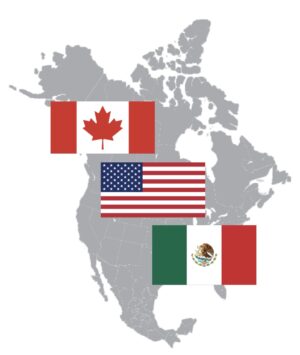 China will be front and centre at the renegotiations of the USMCA on trade despite not having a seat at the bargaining table. …With the USMCA now subject to annual reviews, the US is using the continuing trade talks to put pressure on Canada and Mexico to collaborate with its efforts to undercut China. Washington is alleging that China is exploiting loopholes in the USMCA to avoid US tariffs on its exports by using Mexico and Canada to gain back-door entry to the US market. But there is a difference between blatant customs fraud and legal shipments facilitated by third countries as part of global trade. The US, however, appears intent on blurring that distinction… providing Washington with a convenient pretext to fiddle with the USMCA’s rules of origin and compel more US content to the detriment of the two other signatories to the pact. [to access the full story a Globe and Mail subscription is required]
 Canada’s Forest Products sector is one of our country’s economic anchors, an industry that supports close to 200,000 jobs in communities across the country and accounted for $19.9B in real GDP in 2025. At a time when Canada is facing massive shared challenges — from intensifying wildfires to the need for affordable housing — we cannot afford to let this industry decline. The federal government has already recognized the challenge — a 45% tariff in the US and supply chain bottlenecks and regulatory duplication here at home. And with the recent Forest Sector Transformation Task Force Report, they’ve acknowledged the solution. Now we need them to act. We are not asking for new promises or new frameworks. We’re simply asking government to implement the commitments that are already on the table. And we’re asking you to help us get there. Email the Minister For Natural Resources and your Member of Parliament today! Let them know that by implementing the recommendations from the Task Force Report, they’re protecting one of the key sectors that underpin our entire economy.
 WASHINGTON — The Canadian government told the Trump administration new legislation combating forced labour in supply chains should shield Canada from new tariffs. In a written submission the Government of Canada said it “remains committed to working closely with the US to eradicate forced labour from global supply chains.” …Ottawa’s case was among more than 1,500 written submissions ahead of a hearing in Washington this week on the use of Section 301 of the Trade Act of 1974 to rebuild his global tariff wall. US Trade Representative Jamieson Greer launched a trade investigations into 60 countries, including Canada. Greer said Canada, Mexico, the UK and some other countries should be hit with 10% duties because they are not doing enough to enforce bans on forced labour. …Canada already had legislation intended to curb forced labour in supply chains. But the federal government tabled a bill last month to boost enforcement.
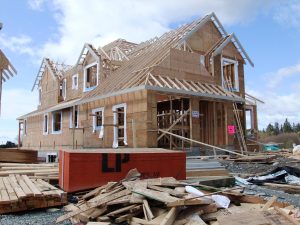 The Trump administration’s decision to forgo renewal of the United States-Mexico-Canada Agreement (USMCA) on the July 1 deadline has opened a new front in the ongoing trade war — and one with direct consequences for US homebuilders and the mortgage professionals who serve them. US Trade Representative Jamieson Greer confirmed on Wednesday that the three countries met virtually for the required joint review and that the US declined to extend the agreement in its current form. The USMCA remains in effect until 2036 but will now be subject to annual reviews that could force significant renegotiation of major sections of the treaty, a development that has rattled an already strained construction supply chain. …Canadian softwood lumber already carries a combined duty burden of 45%. That cost has steadily compressed builder margins even as new home demand remains sluggish and housing starts have declined every year since their 2021 peak.






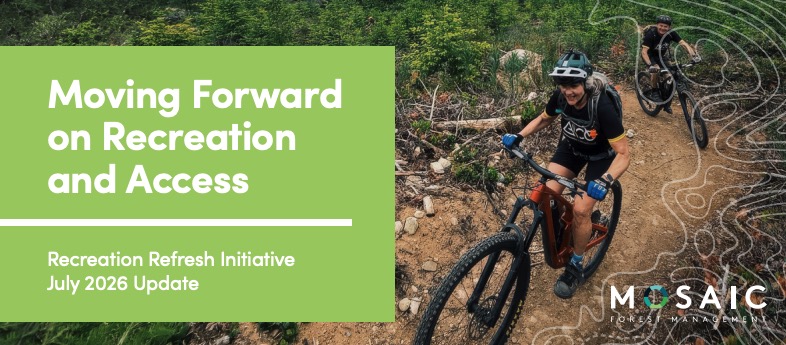

 Alberta’s forestry sector enters a second half of 2026 with cautious optimism, even as weak housing markets supply, U.S. tariffs and softwood lumber duties continue to weigh on the industry. Ken Greenway, Alberta Forestry and Parks’ executive director of strategy, policy and economics, said northern Alberta’s timber industry remains relatively stable compared to some other parts of Canada, where forestry communities have faced sharper contractions. “We haven’t seen huge disruptions,” Greenway said. “Pulp is a weak market and that’s an area of concern, but softwood products prices are slowly moving to the positive side.” …“It’s a cyclical market, we’re at the bottom of a cycle at the moment. The current contraction across Canada – we have not seen as much in Alberta. We hope to withstand this storm.” The industry is also becoming more involved in wildfire mitigation.
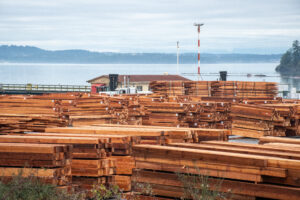 Western Forest Products says a curtailment at its Cowichan Bay sawmill is expected to last until this fall. The curtailment began on May 11, affecting 54 employees. On Wednesday, WFP told CHEK News it currently expects the curtailment to remain in effect through September. The forestry company says the curtailment is due to “persistently weak market conditions” and that it is trying to mitigate impacts on employees by “providing work opportunities at our other operations where possible.” “Conditions are being monitored closely, and we will keep employees informed should the expected duration change,” said Western Forest Products. The curtailment in Cowichan Bay comes as an indefinite curtailment continues at the WFP sawmill in Chemainus. The Chemainus sawmill was curtailed in July 2025, affecting approximately 120 workers, and in January it was announced that the curtailment was expected to last for all of 2026. [END]
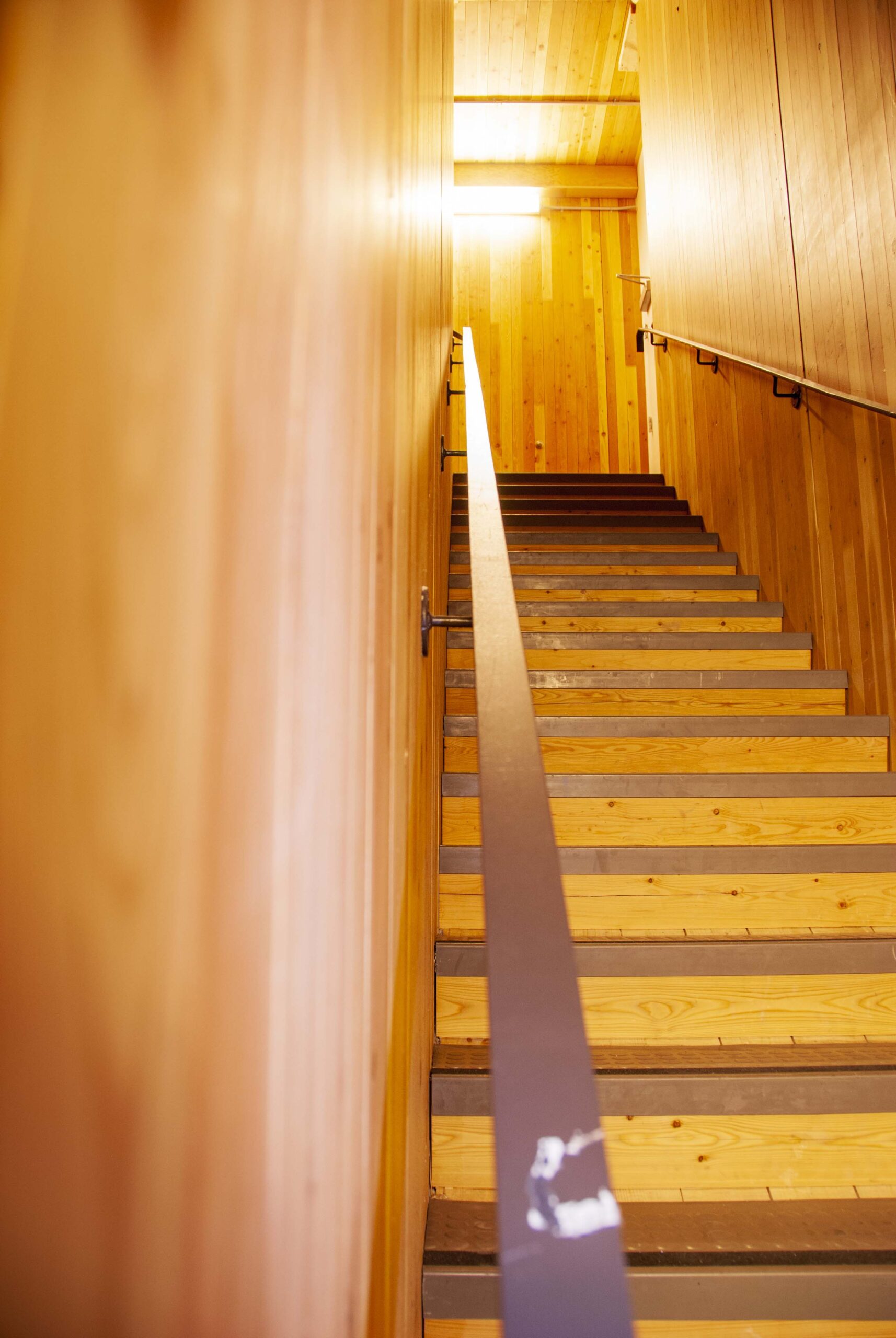 Researchers at the University of Northern British Columbia (UNBC) have received a grant to conduct studies on earthquake-resilient buildings, food packaging, forest diversity and more. The $866,000 granted to five faculty members is being supported through the Natural Sciences and Engineering Research Council of Canada (NSERC) Discovery grant program. …Erin Crockett, ecosystem science and management assistant professor, is receiving $202,000 over the five years to examine “how tree species diversity and structural complexity influence forest growth and resilience in British Columbia.” …Fei Tong, assistant engineering professor, is receiving $190,000 over five years to develop “a new structural system for tall buildings in seismically active regions like Vancouver… The approach, which will be adapted for both conventional construction and tall mass timber buildings, aims to keep buildings safe, functional, and repairable after major earthquakes.”
 BC Supreme Court Justice Barbara Young sent a chilling message to BC landowners when she refused to reopen the case where she designated Aboriginal title over private land in Richmond. Montrose Properties argued it had never received any formal notification that its fee-simple title could be affected by the outcome. This being the first case where Aboriginal title was applied to private as well as Crown land in BC, the federal, provincial and Richmond city governments all supported reopening the application. …Young didn’t rule out that the Cowichan Nation might someday seek to take over all the private land included in the designation of Aboriginal title. …It will be months and maybe years before her findings and those of the New Brunswick court are reconciled. …In the interim, Young has put provincial landowners on notice that they… are at risk from a claim of Aboriginal title.

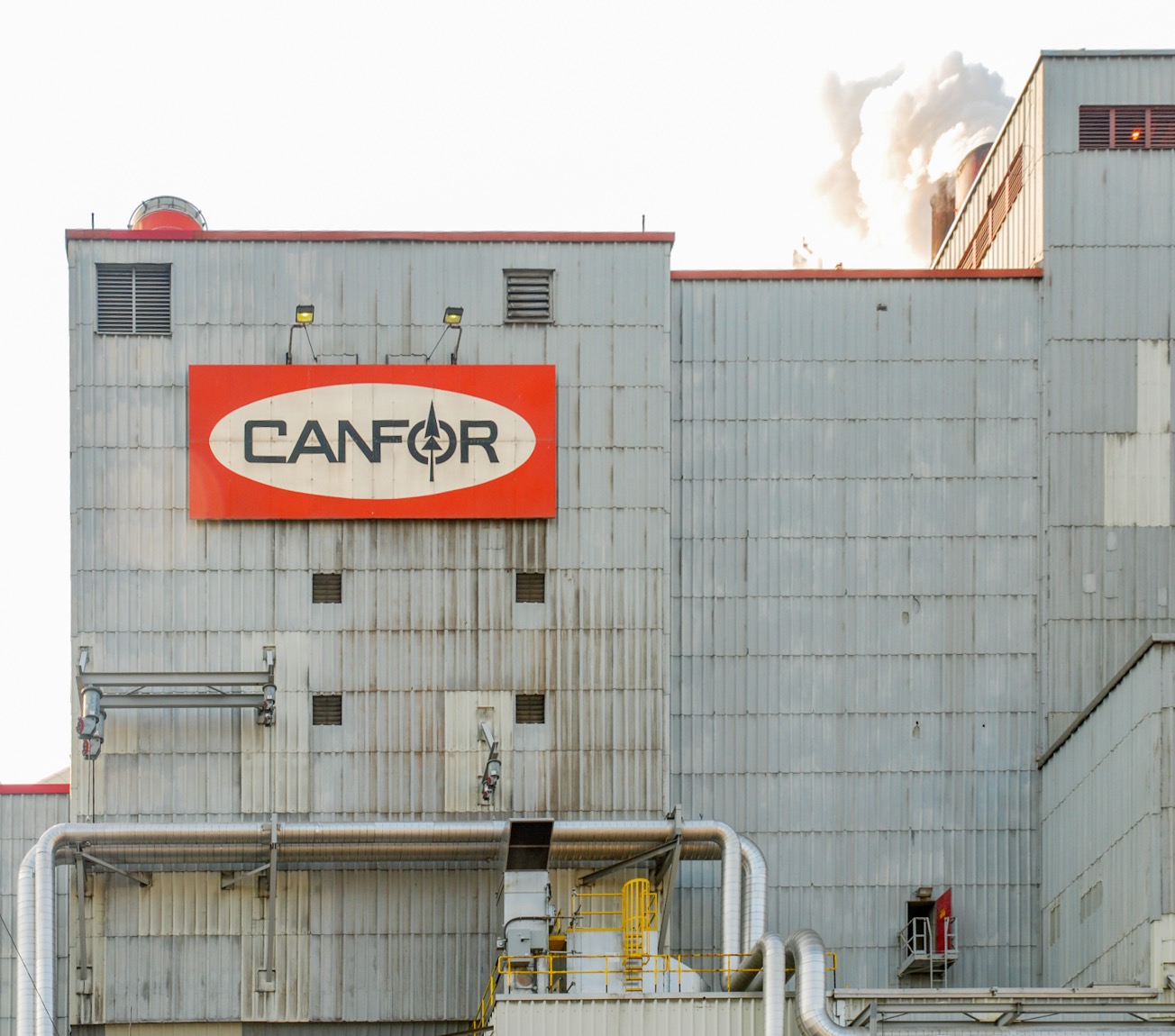
 VANCOUVER, BC — Canfor Corporation announced it has completed the acquisition of PinkWood Ltd, Western Canada’s largest I-joist facility based in Calgary, Alberta. The acquisition, announced on June 9, 2026, complements Canfor’s existing operations in Alberta and British Columbia “We’re excited to welcome the PinkWood operation, its management team and its employees to the Canfor family,” said Susan Yurkovich, President and CEO of Canfor. “The acquisition represents a strong strategic fit for both companies and supports the continued growth of Canfor’s value-added manufacturing capabilities.” PinkWood will retain its name and operate as a wholly owned subsidiary of Canfor. The operation will add 120 employees, and 46 million linear feet of annual I-joist production capacity.
 A volatile trade picture in B.C. continued into April as goods exports fell four per cent month-to-month (unadjusted for seasonality) to $4.5 billion, while imports fell by a more rapid clip of 14 per cent to $6.2 billion. That said, exports were still up significantly year-over-year by 6.7 per cent, while imports rose a more modest 2.1 per cent. …Current year-over-year growth has been driven primarily by energy products, which rose 9.7 per cent (+$128 million), along with metal ores and non-metallic minerals… In contrast, the beleaguered forestry sector declined nine per cent (-$81 million) to $823 million, although April marked the highest monthly export value for the sector in nine months. Forestry continues to face headwinds from elevated U.S. softwood lumber duties, broader trade measures (including Section 232 tariffs), timber supply constraints and softer demand conditions. Year-to-date … forestry exports fell 24.8 per cent (-$1 billion)… In B.C., building permit activity receded sharply in April…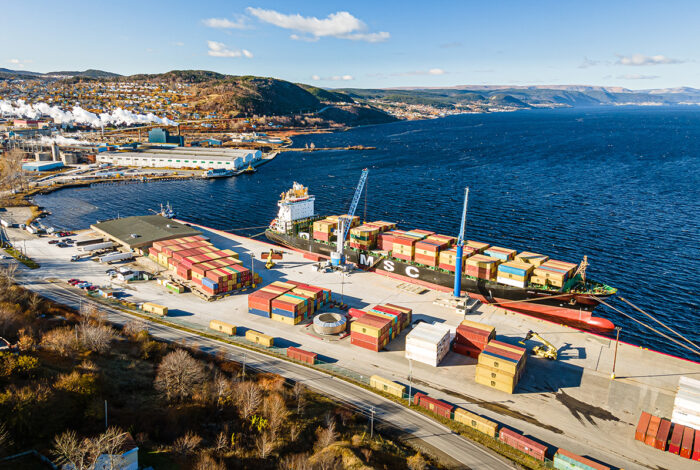



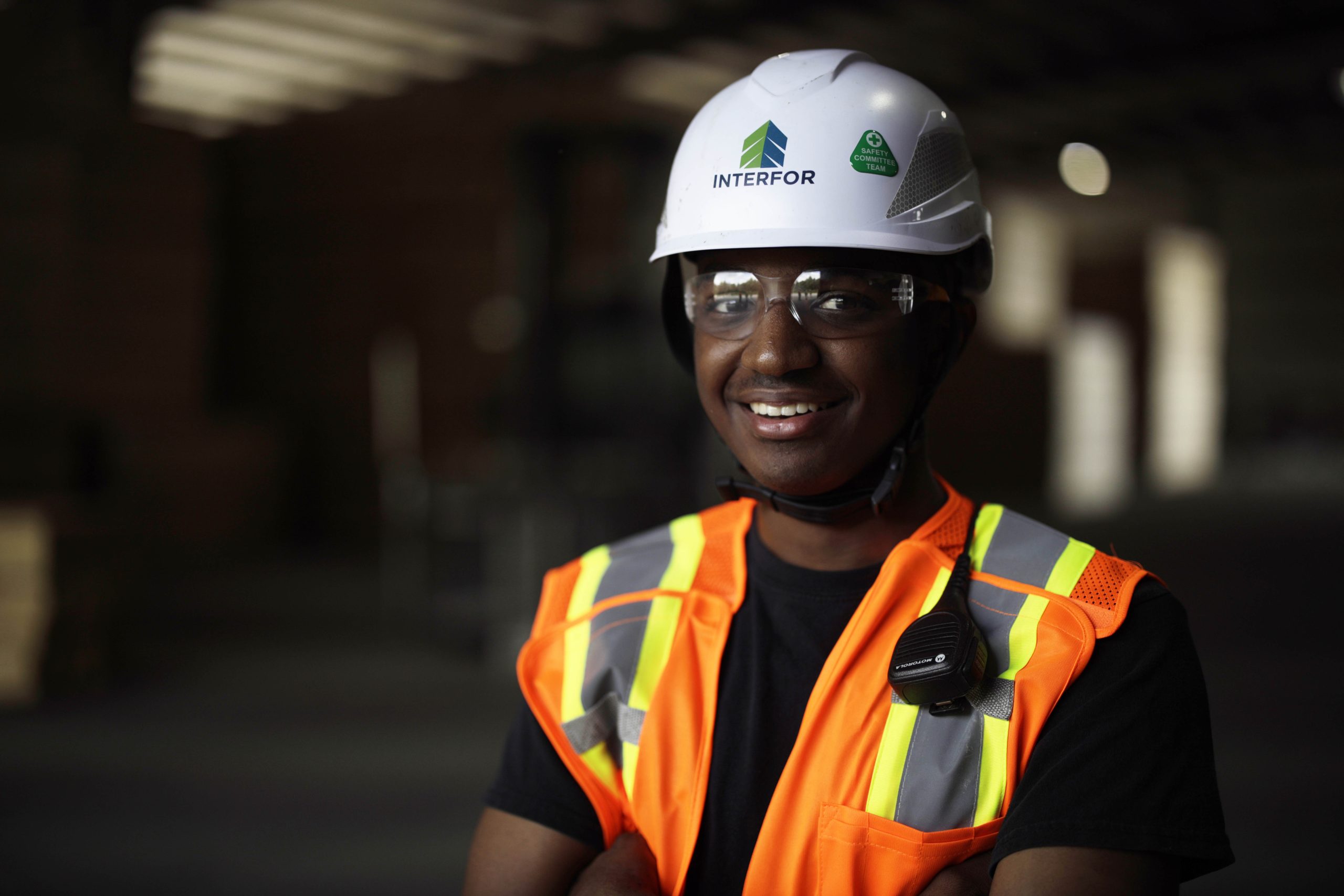




 HUNTSVILLE, Ontario — The Ontario government is investing an additional $425,000 through the Forest Biomass Program to help Daiken North America accelerate production of its new laminated board. This investment will help get a first-of-its-kind wood panel product to market faster, boosting productivity and protecting good-paying local jobs. As part of its plan to protect Ontario, the government is making strategic investments to help forest sector businesses adapt, compete and grow to stay resilient in the face of U.S. tariffs. Today’s announcement builds on the government’s recent investment of
  BELLEVILLE, Ontario — The government is investing more than $3.3 million in
 The US will impose a 25% tariff on most imports from Brazil starting July 22, the U.S. Trade Representative’s office said on Wednesday — the first action under the Trump administration’s new tariff strategy that could eventually affect dozens of countries. …Wednesday’s announcement follows a proposal by the Trump administration in June to impose a punitive tariff of 25% on many imports from Brazil after deciding its practices were unfair on a range of issues from digital trade to illegal deforestation. The tariffs would apply to thousands of Brazilian imports, including sugar, agricultural machinery, apparel, electrical machinery, paper and steel. The U.S. said it would exempt all the products proposed for exemption in the June notice, except high-purity dissolving pulp and non-pharmaceutical applications of certain products. The exemptions include beef, coffee, rare earths, energy products, aircraft and aircraft parts.

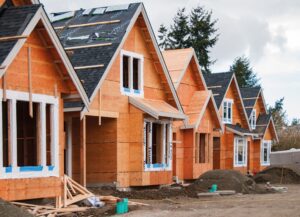 A sweeping bipartisan housing affordability bill President Trump has refused — so far — to sign is set to become law on Friday, provided the president doesn’t act. The legislation, called the 21st Century ROAD to Housing Act, aims to improve housing affordability by incentivizing local governments to build more homes by streamlining complex environmental review processes, making it easier for credit unions and banks to issue mortgages, expanding access to modular homes, and restricting large corporate investors from purchasing single-family homes. Following months of negotiations, the bill passed Congress by wide margins in late June. …But even without Trump’s signature, the housing bill is on track to become law on Friday due to a quirk of constitutional law. …Trump could still veto the bill before Friday, although the final version passed Congress so overwhelmingly — 85-5 in the Senate and 358-32 in the House — that the legislative branch could potentially override his veto.
 SALT LAKE CITY — A group of unions, environmental and civic organizations, and local governments has filed a lawsuit challenging the planned restructuring of the U.S. Forest Service, which includes moving the agency’s headquarters to Salt Lake City and closing regional offices and research facilities. The plaintiffs are alleging that the reorganization would impair the Forest Service’s ability to manage national forests, and they are seeking a preliminary injunction to prevent the USDA administration from moving forward with its reorganization plan. …The lawsuit was filed by Democracy Forward on behalf of more than 30 groups, including the American Federation of Government Employees and American Federation of State, County and Municipal Employees, which represent the USDA employees that will be impacted by the reorganization. The lawsuit alleges that restructuring the Forest Service in this way will reduce the agency’s capacity to sustainably manage national forests and engage in fire response and prevention efforts.
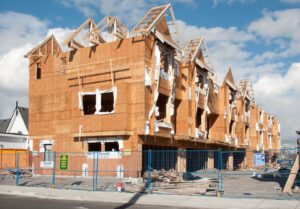 WASHINGTON – President Trump said he hasn’t decided whether he will sign a bipartisan housing bill, dismissing the landmark affordable housing legislation as “a big yawn” and “so unimportant” compared to an unrelated bill he supports to overhaul voting in elections. Trump told reporters on Monday, June 29 that he won’t make a decision on The 21st Century Road to Housing Act until it arrives on his desk. The president abruptly canceled a signing ceremony last week for the housing bill and said he won’t sign it until Congress passes the SAVE America Act ‒ a stalled bill he backs that would require photo identification and proof of citizenship to vote in federal elections and prohibit universal mail-in voting across the country. …The housing bill is the first major piece of legislation that passed Congress in more than three decades to address the nation’s affordable housing crisis.

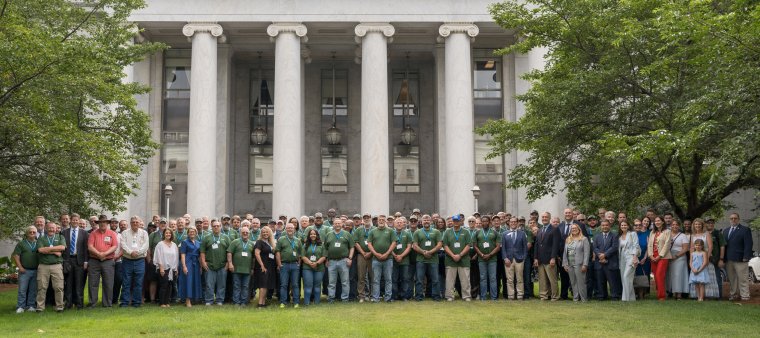


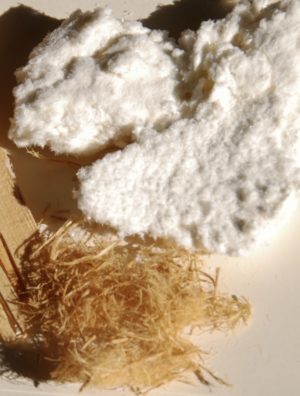 Two new inspections into kraft pulp and paper mills in Washington have been opened, following ongoing investigations at the Nippon Dynawave mill where a tank failure killed 11 workers. The Washington State Department of Labor & Industries said investigations are going on at two other active paper mills in the state that use the same process, where caustic chemical compounds are used to help break down wood into pulp for paper product manufacturing. In the weeks following the implosion of a massive tank at the paper mill that spilled hundreds of thousands of gallons of chemicals – believed to be the deadliest industrial accident in state history – managers of similar operations have been dialing up their insurance brokers to find out how well they’re protected. One investigation is occurring at a mill run by Smurfit Westrock, also in Longview. The other, run by Port Townsend Paper Company, is in Port Townsend.





 GERMANY — Mercer Torgau announced strategic actions at its Torgau facility in Germany including an expected overall workforce reduction of approximately 350 positions. …Mercer Torgau has been impacted by ongoing uncertainty in the global economy as well as heightened raw material and energy costs. …These strategic actions involve initiatives to streamline Mercer Torgau’s organization and processes, along with adjustments to its product portfolio. Among other things, Mercer Torgau’s production capacity and workforce structure will be realigned with market conditions. An initial reduction of approximately 100 contractor positions is expected in July 2026, and Mercer Torgau expects an overall workforce reduction of approximately 350 positions. Strategic actions have commenced and are expected to be completed in stages, completing in or about the second quarter of 2027. …Mercer Torgau manufacturing focuses on lumber for construction and packaging, pallets, planed wood products, wood pellets and briquettes.
 Cepi’s